
Saint-Pierre in Martinique: a jewel of history and culture !
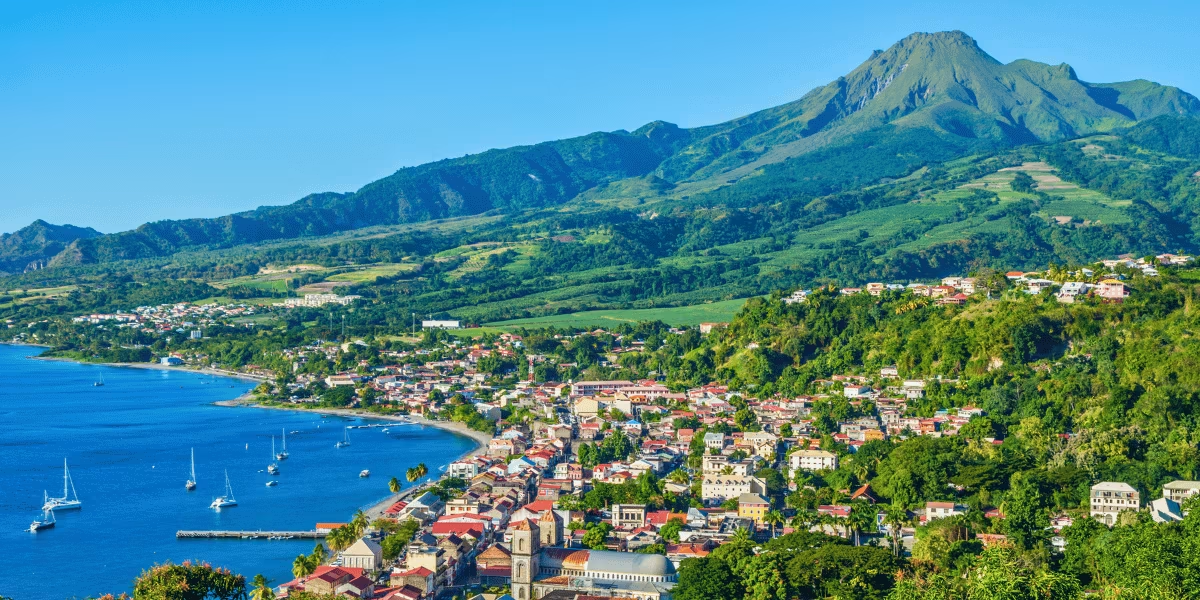
Saint-Pierre, Martinique
Saint-Pierre isn’t just a city to visit… it’s a place to experience. Once the economic and cultural capital of Martinique, it still bears the marks of its past, shaped by the 1902 eruption of Mount Pelée. Today, amid ruins, the sea, and volcanic terrain, the town offers a unique, almost timeless atmosphere, with the imposing silhouette of the mountain as a backdrop. Saint-Pierre isn’t just a stopover; it’s a town with a rich history and a unique atmosphere on the northern Caribbean coast. What is there to do in Saint-Pierre? Visit the historic ruins, the waterfront, the diving spots, and the views of Mount Pelée—activities in Saint-Pierre blend culture and nature. To truly experience Saint-Pierre, you need to take the time to understand what happened here. And if the weather changes—which happens more often in the north, there are always options in Saint-Pierre when it rains, such as the Franck Perret Museum.
🌋 Saint-Pierre, the city that rose from the ashes
Saint-Pierre isn’t like other towns in Martinique. Once the island’s economic capital, the town was long considered the “Little Paris of the Antilles.” Founded in the 17th century, Saint-Pierre grew around the sugar and rum trade, becoming one of the most important cities in the Caribbean. But in a matter of minutes, the eruption of Mount Pelée on May 8, 1902, completely destroyed the city. Among the most striking accounts, that of Louis-Auguste Cyparis, one of the few survivors of the disaster, remains etched in local memory. Locked in a cell with thick walls at the time of the eruption, he survived where an entire city had vanished. A story that lends an almost surreal dimension to the visit. In Martinican Creole, Saint-Pierre is called “Sen Piè,” and its inhabitants are known as Pierrotins. A town that, despite its past, has managed to be reborn, rebuild, and today pass on this memory.
📮 Zip Code : 97250
👥 Population: approximately 4,000
🗺️Nearby towns : Le Carbet, Morne-Rouge, Fonds-Saint-Denis
Saint-Pierre is located about 1 hour and 15 minutes from Aimé Césaire International Airport, along the Caribbean coast.
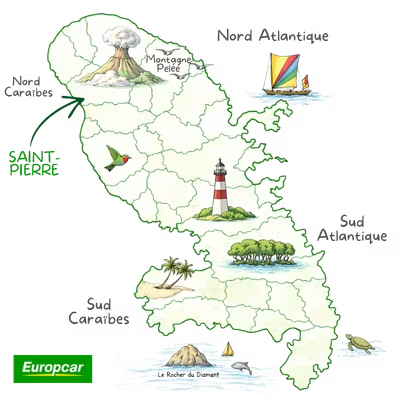
We love Saint-Pierre for:
💚 Its unique heritage, shaped by the 1902 eruption, with its impressive ruins and museums that tell the story of Martinique’s former capital.
💚 The majestic presence of Mount Pelée, a UNESCO World Heritage Site since 2023, which towers over the city and attracts hiking enthusiasts and lovers of spectacular scenery.
💚 Its peaceful black-sand beaches with a wilder feel, where you can enjoy a calm atmosphere, far from the hustle and bustle of the island’s south.

What to see and do in Saint-Pierre, Martinique? Top 10 activities
1. Explore the ruins from the 1902 eruption
The ruins of Saint-Pierre, frozen in time since the devastating eruption of Mount Pelée in 1902, are a veritable open-air museum. Among the must-see sites are the old theater, where 800 people perished, and the prison, where the famous prisoner Cyparis miraculously survived. These historic sites immerse you in a past that is as fascinating as it is tragic.
2. Climb the volcano: the majestic Mount Pelée
For nature lovers and thrill-seekers, 🔗climbing Mount Pelée is a must-do adventure in Saint-Pierre. This iconic volcano, rising to 1,397 meters, offers a breathtaking hike through lush landscapes and stunning panoramic views. Several trails, suitable for hikers of all levels, lead you to the summit, where you’ll be rewarded with a panoramic view of the entire island and the Caribbean Sea. With every step, you’ll immerse yourself in the wild nature of Martinique and have an intimate encounter with one of the world’s most famous volcanoes.
3. Discover the art of distillation at the Depaz Distillery
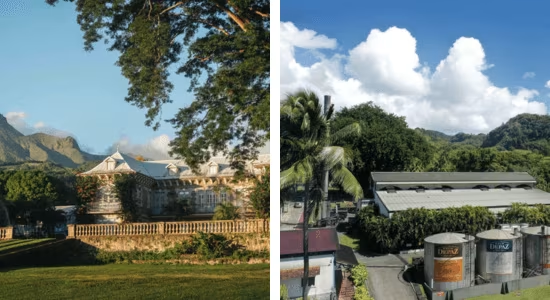
The Depaz Distillery is located at the foot of Mount Pelée in Saint-Pierre. © Source: Habitation Depaz website
Nestled at the foot of Mount Pelée in Saint-Pierre, the Depaz Distillery is a place steeped in history and expertise. Founded in 1651, 🔗this distillery is one of the oldest in Martinique. During your visit, you’ll discover the rum-making process, from harvesting sugarcane to distillation in traditional copper stills. The estate, which offers breathtaking views of the sea and the mountains, is a true gem, combining heritage and tasting.
Practical Information 🕒: 10:00 AM – 4:30 PM.
4. Immerse yourself in the mystical world of Manman Dlo’s underwater sculptures
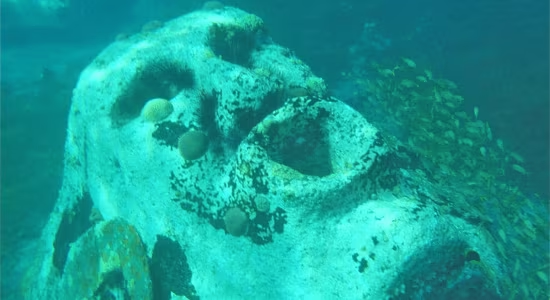
Manman Dlo, an underwater sculpture in Saint-Pierre, Martinique © azmartinique.com
Beneath the crystal-clear waters of Saint-Pierre Bay lies a unique artistic treasure: the underwater sculpture Manman Dlo. This monumental work, created by artist Laurent Valère, depicts a sea deity, symbolizing the power and fertility of the ocean. Accessible by snorkeling or scuba diving, this statue, immersed in a breathtaking natural setting, invites visitors to explore the sacred bond between humanity and the sea.
5. Chill out on the beaches of Saint-Pierre
After a day full of discoveries, the beaches of Saint-Pierre welcome you for a well-deserved moment of relaxation. These black-sand beaches, the result of volcanic activity, offer a unique setting to unwind away from the crowds.
You can enjoy the calm waters for a refreshing swim while admiring the imposing silhouette of Mount Pelée in the background. The beaches of Saint-Pierre are the perfect place to unwind and recharge your batteries before setting off again to explore the island.
6. Explore the Saint-Pierre Volcanological Museum
The Saint-Pierre Volcanological Museum offers a fascinating journey into the world of volcanoes and, in particular, the history of the 1902 eruption. The museum houses a rich collection of artifacts, photographs, and eyewitness accounts that chronicle the tragic events that devastated the city.
From fragments of solidified lava to survivors’ accounts, each exhibit brings you a little closer to understanding this natural disaster.
7. Relive the 1902 Eruption at the Frank Perret Museum – Memorial to the Catastrophe
The Frank Perret Museum in Saint-Pierre, also known as the Memorial to the Catastrophe, is a memorial dedicated to the victims of the 1902 eruption. Founded by American volcanologist Frank Perret, this museum offers a poignant perspective on the event through a collection of personal items, photographs, and historical documents. It is a deeply moving space where one can truly feel the full weight of the tragedy that struck Saint-Pierre.
8. Expand Your Knowledge at the Earth Sciences Discovery Center
The Earth Sciences Discovery Center in Saint-Pierre is a must-visit for anyone interested in geology and the natural sciences. Located near Mount Pelée, this educational center features interactive exhibits on the formation of volcanoes and earthquakes.
9. Explore Shipwrecks While Scuba Diving
Saint-Pierre is also a popular destination for divers, thanks to the many shipwrecks that sank during the 1902 eruption. These wrecks, resting at the bottom of the bay, offer a fascinating sight for scuba diving enthusiasts. You can explore the remains of merchant ships and steamboats and discover an abundant and diverse marine life. It’s a unique underwater adventure, blending history with the exploration of the seabed.
10: Treat Yourself to a Culinary Journey in Saint-Pierre, at the Heart of Creole Gastronomy
Saint-Pierre, with its rich historical heritage, also offers a culinary scene that will delight lovers of Creole cuisine. The city is home to about a dozen restaurants, each offering a unique experience that blends Martinican culinary traditions with international influences. Whether you’re a foodie or simply curious to discover local flavors, Saint-Pierre is a must-visit destination to taste the authenticity of Creole cuisine.

What can you do in Saint-Pierre in a day?
Once the economic capital of Martinique, the town still bears the scars of the Mount Pelée eruption. As you wander among the ruins, the Cyparis prison, the old buildings, and the scattered remnants, you’ll discover a unique, almost silent atmosphere where every stone has a story to tell. This isn’t a typical tour—it’s an immersive experience. At noon, take a break in the town center, facing the sea. The atmosphere here is calmer, almost timeless. A few restaurants and small establishments offer simple cuisine, often with a direct view of the water, providing a soothing contrast after the morning. In the afternoon, Saint-Pierre offers a beautiful sunset over the black-sand beaches. Take the time to stroll along the coast. For a pleasant vantage point, you can admire the colors of the late afternoon from Saint-Pierre’s floating pier, with the bay right in front of you. In the early evening, the market square slowly comes to life. Stop by for a visit, simply to experience the town in a different way once the day is over.

Spend a day exploring Saint-Pierre
Agenda Culturel : les temps forts de l'année à Saint-Pierre
📅 February: The Saint-Pierre Carnival
The 🔗Saint-Pierre Carnival is a highlight of the year, featuring colorful parades, elaborate costumes, and lively music. It’s an event not to be missed if you want to experience the city’s festive spirit. 🔗In Martinique in February? Find all the month’s highlights here
📅 May: Le Mai de Saint-Pierre, European Night of Museums, International Hiking Festival
Every year, Le Mai de Saint-Pierre celebrates the anniversary of the eruption with exhibitions, lectures, and artistic events paying tribute to the city’s resilience.
European Museum Night is another highlight of May, featuring numerous guided tours, lectures, and evening activities in Saint-Pierre’s museums.
The International Hiking Festival in Martinique is an unmissable annual event in Saint-Pierre, a land of volcanoes and discovery. Saint-Pierre offers historic trails in the heart of a city marked by the 1902 eruption of Mount Pelée. The hikes organized as part of the festival take you through the ruins to the summit of the volcano, offering spectacular views of the city and the Caribbean Sea.
The abolition of slavery (May 22) is also celebrated in Saint-Pierre with numerous festivities. 🔗In May in Martinique? Find all the month’s highlights here
📅 June: Music Festival
The Music Festival features free concerts, entertainment, and dance performances in Saint-Pierre on June 21. 🔗In June in Martinique? Find all the month’s highlights here
📅 July: Saint-Pierre’s Patron Saint’s Day
Saint-Pierre’s Patron Saint’s Day is a traditional event that brings the community together for religious celebrations, concerts, and local festivities. 🔗In July in Martinique? Find all the month’s highlights here
📅 September: European Heritage Days
A unique opportunity to discover the hidden treasures of Saint-Pierre, with guided tours of historic sites, museums, and monuments usually closed to the public. 🔗In September in Martinique? Find all the month’s highlights here
📅 October: Science Festival and National Architecture Days (Matjoukann Festival)
In Saint-Pierre, the Science Festival features workshops, lectures, and exhibitions for all ages, focusing on the natural sciences and volcanology.
National Architecture Days take place in October and feature the Matjoukann Architecture Festival in Saint-Pierre. The goal is to highlight the architecture and heritage of Saint-Pierre and Martinique through games, temporary installations, and artistic performances. 🔗In October in Martinique? Find all the month’s highlights here
📅 November: Madifloral
This floral event celebrates Martinique’s botanical richness with flower exhibitions, garden competitions, and gardening workshops. 🔗In November in Martinique? Find all the month’s highlights here
📅 December: The Rasta Market
The Rasta Market is a craft market where you can discover local products, handicrafts, and music in an authentic and friendly atmosphere. 🔗Visiting Martinique in December? Find all the month’s highlights here


Car Rental in Saint-Pierre
In Saint-Pierre, you’ll quickly find yourself enjoying the open road. Between the historic ruins, the Caribbean coves to the north, and Mount Pelée looming in the distance, every drive feels like an adventure.
Renting a car in Saint-Pierre means you can go from a morning dive to lunch overlooking the sea, then end the day on a road lined with tropical forest. In northern Martinique, distances seem short on the map… but you’ll often be tempted to stop along the way.
Need to rent a car to go to Saint-Pierre?
To visit Saint-Pierre and the surrounding area, renting a car is an excellent option. Our agency offers a wide range of vehicles to suit your needs and budget. Whether you're looking for a small city car or an SUV, we've got what you need. Book your car now at www.europcar-martinique.com.
🚗♻️ Don't forget to drive responsibly and carpool.











Sign up for our newsletter
And receive our promo codes and exclusive car rental offers in Martinique, delivered straight to your inbox.


