
Easter in Martinique, a Christian holiday that combines religion and gastronomy !
What to do at Easter in Martinique?
If you're wondering what to do in Martinique at Easter, the answer is simple: experience the island to the fullest. Easter in Martinique is a vibrant and festive celebration! Why not spend Easter in Martinique in 2026?
Traditional festivities, local crab specialties, cod fritters, Easter egg hunts—there are many ways to get into the spirit of the season.

The Easter holidays in Martinique mark the start of big reunions with family and friends. The southern beaches, such as Sainte-Anne and Le Diamant, fill up with groups settling in for the day, sometimes even for the whole weekend. Coolers, dominoes, soft music playing in the background... the atmosphere is relaxed, warm, and typically Martinican. In Martinique, Catholicism is the most widely practiced religion. As such, most traditional celebrations and practices are inherited from Christian liturgy. Easter marks the end of Lent, which lasts 40 days and begins the day after Ash Wednesday (the last day of Carnival).
Easter vacation dates in Martinique
The Easter holidays in Martinique will take place from Saturday, March 28, 2026, to Monday, April 13, 2026, when classes resume. For Martinique in 2026, the public holidays around the Easter holidays are as follows:
Sunday, April 5, 2026: Easter
Monday, April 6, 2026: Easter Monday → official holiday in Martinique
How to celebrate Easter in Martinique?
Easter is celebrated over several days in the French West Indies. First, Holy Week begins with Palm Sunday Mass, which takes place on the Sunday one week before Easter Monday. The following three days are very focused on religion, the Stations of the Cross, and Mass.
Thursday: it's the Chrism Mass.
Good Friday: This is a public holiday in Martinique and a very important day, as it commemorates the death of Christ. The Stations of the Cross are crowded with people after mass, particularly on Mount Vauclin.
Easter Sunday : After Mass, some Martinicans gather with their families for a meal featuring crab matoutou. For others, the meal will be on Easter Monday instead.
Easter Monday: : This is the second day of Easter week. There are no religious ceremonies on this day. It is a public holiday and an opportunity for Martinican families to get together and enjoy matoutou on the island's various beaches.


Easter in Martinique, a celebration with incredible culinary traditions
🏖️ Lively but friendly beaches
The southern beaches such as Sainte-Anne, Les Anses-d'Arlet, and Le Diamant become gathering places. People settle in for the day, sometimes for the weekend. Coolers, dominoes, music, barbecues... the atmosphere remains warm and family-friendly. The Easter holidays are also ideal for alternating between the sea and the river. The lush north offers spectacular landscapes, accessible by road.
🦀 An unmissable tradition: crab
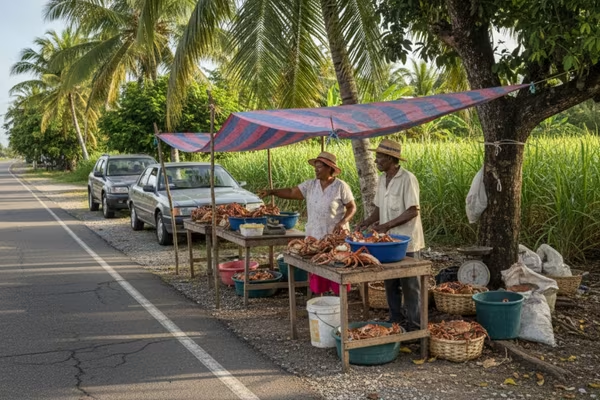
It is impossible to talk about Easter traditions in Martinique without mentioning... crabs. In Martinique, when we talk about Easter crabs, we mainly think of the land species used for matoutou. But there are many species of crabs.
Land crabs: These crabs are found in wetlands, forests, and mangrove forests. They are more active during the wet season, which coincides with Easter.
Cirique crabs: Often recognizable by their bluish hues, these crabs live in coastal areas and mangrove forests. They are eaten, but are less common in traditional matoutou than land crabs.
Mangrove crabs: Several species live in the mangroves of Martinique. Not all of them are used in traditional Easter dishes, but they are part of the local ecosystem. For example, there is the cé ma fot (fiddler crab), recognizable by its large claw, the red mangrove crab or toulou crab with its red and black shell, and the mantou crab, a robust crab found in coastal areas.
How are crabs caught?
There are two well-known techniques for successfully catching crabs:
the first involves setting a trap called a "ratière" or "zatrap" in Creole.
The second involves waiting for the crabs to come out of their burrows to capture them, or going directly into their burrows to catch them by hand using equipment (boots, hats, gloves, bags).
Once caught, the crabs are fed so that they expel all the "waste" swallowed in the days prior to their capture and are "cleaned." They are fed breadfruit leaves or fruits and vegetables (mangoes, coconuts, peppers, sugarcane, tomatoes, corn, etc.). They are then killed and brushed. The shells are discarded or used later to prepare stuffings served as appetizers. The legs and claws are the essential ingredients of the dishes.
Cooking in Martinique during Easter: flavors and sharing
Traditional Martinican cuisine is known for its unique flavors and spices, many of which are inherited from Caribbean, French, Indian, and African influences. One of the region's most iconic dishes is matoutou.
On the menu:
Crispy accras (yes, them again... and we never tire of them): These fish, vegetable, or other fritters may be small, but they are delicious. Every bite you take will be filled with fragrant herbs, fresh fish (e.g., cod, shrimp), and lots of spices. A real treat!
Stuffed crabs: In some festive variations, crabs can be stuffed with a mixture of herbs, spices, and sometimes vegetables, offering an explosion of typical Creole flavors.
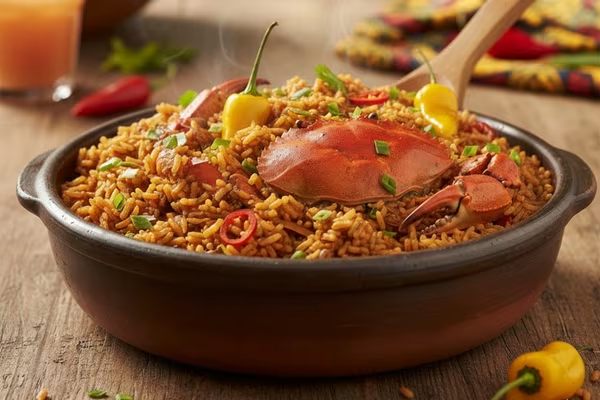
Crab matoutou (the essential Easter dish): This traditional stew made with land crabs, rice, and local spices is the centerpiece of Easter Monday gatherings.
Crab dombrés: these flour balls cooked with pieces of crab and spices are another specialty that can be found around Easter.
Local juices and traditional sweets: during celebrations, these dishes are often accompanied by fresh tropical fruit juices and Creole desserts, for a complete taste experience on the island.

What to do at Easter in Martinique?
🦀 Crab Fair in Le Vauclin Every year, the Crab Fair is usually held the week before Easter weekend. It is a large, friendly exhibition and sale where you can discover different species of crabs, taste local recipes (matoutou, crab fricassee, accras) and enjoy entertainment throughout the day. 🍲 Crab festival and communal meals Easter weekend is largely devoted to crab matoutou, often enjoyed by the sea or on the beaches on Easter Monday. Families and friends get together for a big festive meal, sometimes accompanied by small culinary competitions or crab-themed games. 🐣 Easter markets and entertainment Easter markets are sometimes organized in certain towns, with stalls selling local products, crab sales, and sometimes gourmet entertainment based on Easter traditions. 🌊 Egg hunts and family activities In addition to culinary traditions, some families and towns organize Easter egg hunts or activities for children on beaches or in gardens, combining family celebrations with local cuisine. 🙏 Religious celebrations and Christian traditions Good Friday and Easter Sunday remain important dates for religious celebrations and processions in the island's parishes, with services and sometimes symbolic walks in the hills and villages.

🚙 Getting around easily in Martinique
To explore the island easily, renting a car is still the best option. Europcar Martinique offers a wide selection of recent vehicles (economics cars, SUVs, utility vehicles) with agencies located at Aimé Césaire Airport and in strategic areas.











Sign up for our newsletter
And receive our promo codes and exclusive car rental offers in Martinique, delivered straight to your inbox.


